Class 9 Aerospace and Propulsion
9A system, equipment, and components
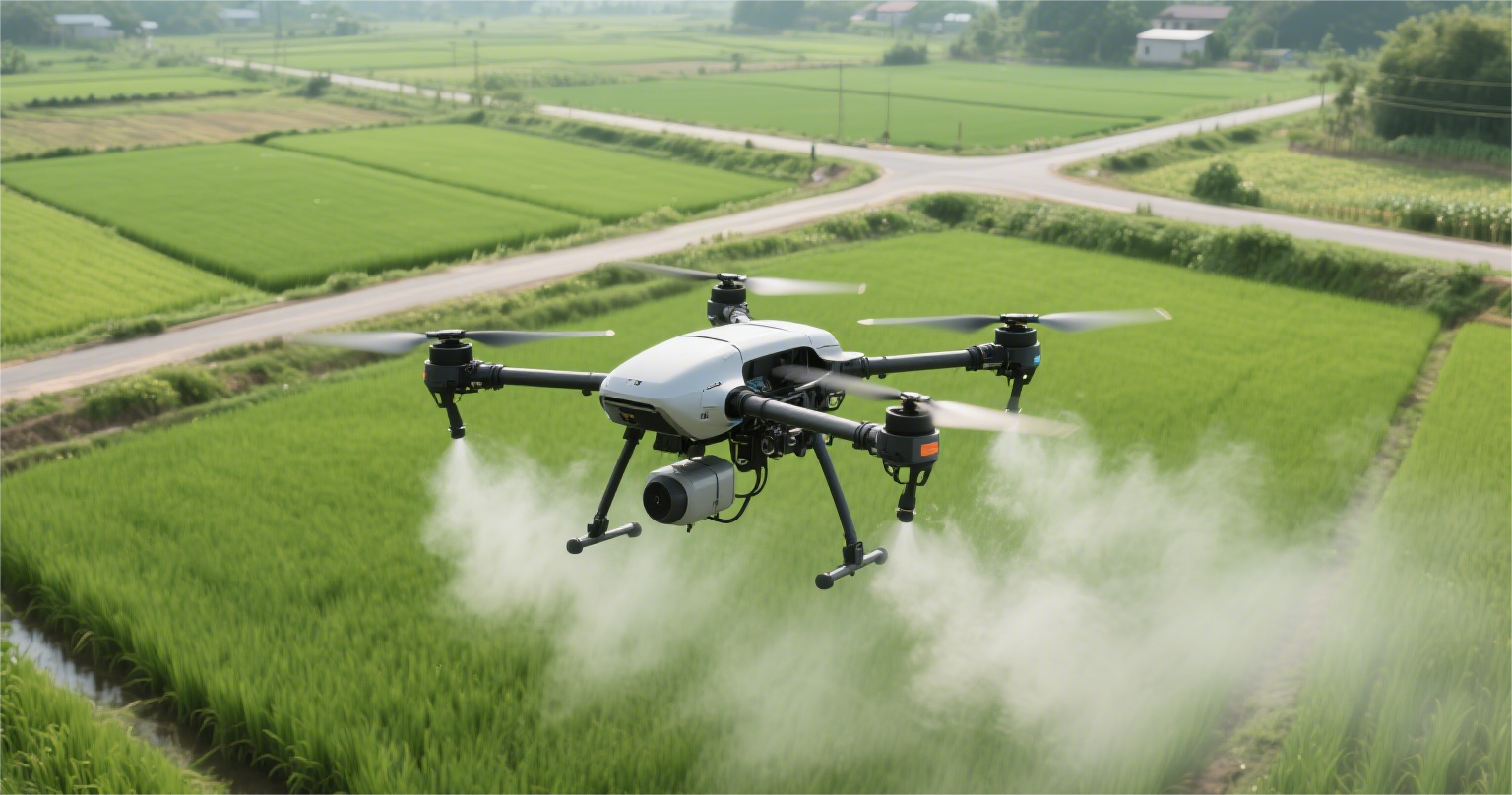
9A012 "Unmanned Aerial Vehicle", "Unmanned Airship" and related equipment and components:
a. An "unmanned aerial vehicle" or "unmanned airship" capable of controllable flight beyond the "operator" or "natural line of sight" and possessing any of the following characteristics:
1. The maximum "endurance time" is greater than or equal to 30 minutes and less than 1 hour, and it has takeoff capability and stable controllable flight capability under gust conditions greater than or equal to 46.3 km/h (25 knots);
2. The maximum "battery life" is greater than or equal to 1 hour;
Technical Specifications:
1. "Operator" refers to the professional personnel responsible for operating "unmanned aerial vehicles" or "unmanned airships", remotely controlling or programming the aircraft through ground control stations to ensure the smooth completion of flight tasks;
2. "Endurance time" refers to the continuous flight time converted to the international standard atmospheric environmental conditions (ISO2533:1975) at sea level with zero wind;
3. "Natural line of sight" refers to the maximum distance at which an observer can clearly see an object on the Earth's surface under ideal conditions without any human interference or atmospheric pollution. Sight distance refers to the maximum distance at which an observer can clearly see an object on the surface of the Earth due to the curvature limitations of the Earth. In practical applications, the influence of atmospheric conditions on line of sight is usually considered.
b. Engines used for "unmanned aerial vehicles" or "unmanned airships":
1. Design or improve an intake piston or rotary internal combustion engine for "high-altitude" flight above 15420 meters (50000 feet);
2. Aircraft engines with a maximum continuous power exceeding 16 kW;
c. Specially designed "payloads" for specific "unmanned aerial vehicles" or "unmanned airships" that meet certain technical specifications, including "infrared imaging equipment", "synthetic aperture radar", "target indication laser", inertial measurement equipment:
1. Infrared imaging devices with the following two characteristics:
a. The wavelength range is 780-30000 nm;
b. Instantaneous field of view (IFOV) less than 2.5 mrad;
2. Synthetic Aperture Radar (SAR) with a range greater than 5 km and possessing any of the following characteristics:
a. The resolution of the 'strip mode' is better than 0.3 meters;
b. The resolution of the "beam focusing mode" is better than 0.1 m;
3. A "target indicating laser" that can operate stably in environments above 55 ℃ and has all of the following characteristics:
a. Temperature free type;
b. Energy greater than 80 mJ;
c. Stability better than 15%;
d. The beam divergence angle is less than 0.3 mrad;
4. Inertial measurement equipment with all of the following characteristics:
a. The heading accuracy is less than 2 °;
b. Attitude accuracy less than 0.5 °;
c. Resolution less than 0.1 °;
Explanation: Items 9A012. c.4 do not control the relevant items regulated by 7A and 7B.
d. Specially designed equipment or components for converting manned aircraft or airships into "unmanned aerial vehicles" or "unmanned airships" regulated under 9A012. a.1;
e. Radio communication equipment specifically designed for specific "unmanned aerial vehicles" or "unmanned airships" and possessing any of the following characteristics:
1. The transmission distance of "wireless TV distance" is greater than 50 km;
2. The ability to control multiple aircraft in one station is greater than 10.
Explanation: Items 9A012. a, 9A012. b1, and 9A012. d do not regulate model aircraft or model airships.
Technical description: Regarding item 9A012:
1. "Infrared imaging equipment" is a detection device that uses the infrared radiation emitted by objects to form images, widely used in fields such as night vision, thermal imaging, search and rescue.
Synthetic Aperture Radar (SAR) is an active microwave remote sensing system that uses synthetic aperture technology to obtain high-resolution radar images, suitable for terrain mapping, environmental monitoring, and other applications.
3. "Target indicating laser" is a laser device used in the military field, which can accurately point at the target and mark it for laser guided weapons to strike it.
4. 'Instantaneous field of view angle' refers to the field of view angle that a detector can cover at a certain moment, which determines the spatial resolution of the detector.
Band mode "is a mode of operation for synthetic aperture radar, in which the radar beam continuously scans the ground along the flight direction, forming a wide scanning band.
6. "Beam focusing mode" is a mode of operation for synthetic aperture radar, in which the radar beam is focused for a long time in a specific area to achieve higher spatial resolution.
7. "Beam divergence angle" refers to the degree to which a beam diverges during propagation, and is commonly used to describe the focusing performance of laser beams or other types of beams.
8. "Wireless TV distance" refers to the maximum distance that radio waves can propagate in free space without any obstacles.